
Over the last month, The Hillsboro Globe has had the privilege of interviewing doctors and local residents of Tennessee to learn more about vaccines and their opinions on the recent changes in vaccine recommendations for children.
Hillsboro Globe (HG): Do you feel this is beneficial or harmful to kids and/or parents to not recommend certain vaccines?
 Courtney Zola, MD, MSCI, Infectious Diseases (CZ): “The US childhood vaccine guidelines were refined over decades using data from the US population.
The recently released update to the guidelines frequently cites vaccine schedules for European countries as the inspiration or justification for the changes.
The thing to remember is, European countries have a very different healthcare landscape from the US.
- Their overall population is much smaller
- They tend to have more homogenous populations
- Many of the immigrants in Europe tend to come from different countries than those in the US
- 4) those countries tend to have nationalized healthcare and thus healthier populations overall… To me, it makes no sense to try to modify our US vaccine guidelines to match those of a country that is completely different from ours.

For example, Denmark doesn’t routinely vaccinate children against hepatitis A, and infection that can cause a diarrheal illness that is easily spread to others and can rarely cause severe liver disease or even death. Denmark has basically no hepatitis A and no people moving there who bring it to Denmark, so they don’t need to vaccinate against it.
In contrast, the US today has periodic outbreaks of hepatitis A in places like restaurants and daycare centers. I have seen cases myself in the hospital.
We also have people from all over the world who come to the US from countries where this infection is common and bring it here.
The US used to have lots more hepatitis A, but giving young children as well as adults the vaccine worked to make it rare. However, the conditions are there for hepatitis A to come roaring back if we stop vaccinating.
Changing US guidelines to follow a different country isn’t justified by science.
It seems to me that the people currently making these guidelines wish to add the veneer of scientific respectability to decisions that are made with different motivations – such as trying to limit vaccine access and reduce trust in vaccines.
I worry that adults are making decisions for kids’ bodies that put those kids at risk of dangerous diseases that those adults have never had to face…because today’s adults DID get these vaccines as children.
Nearly all adults today have no personal experience of these vaccine-preventable infections, and so they underestimate how bad they can be. They perceive the risk of vaccines as much greater than the risk of the disease, when it is not.
Most of the changes to the vaccine guidelines have changed from simply ‘recommended’ to use ‘shared clinical decision making’ with your healthcare provider. This means to talk to your doctor about whether vaccines are a good choice for you, personally.
I advise that all parents and kids old enough to help with their own healthcare decisions DO talk to their doctors, ask questions and be proactive about vaccines.
I am an infectious disease doctor, and I also have a master’s degree in clinical trials research. I have conducted medical research myself and I have participated in clinical trials as a study subject.
I have never met an evil scientist who is trying to harm or mislead people. Every researcher I have worked with has been trying to help people and to better understand how the human body works and how to better treat diseases that hurt people.
Please give science a chance.
Whenever you look for medical information online, please ask yourself about the quality of the source. Is this a respected medical organization, like the American Academy of Pediatrics? You can probably trust that.
Is this a person on TikTok who makes their living by getting people to click on their videos, regardless of the truth of the content? Is this someone who has a day job maybe in public health who posts YouTube videos as part of public service?
Is this a politician with no medical training at all? The examples above are not all equally reliable. If nothing else, try to verify anything new or shocking from multiple different types of information sources.
If a medical fact on TikTok is really true, you will probably be able to verify it using other sources, such as the American Academy of Pediatrics, the American Academy of Family Physicians, the Mayo Clinic, the Cleveland Clinic, etc. And you can always ask your doctor.”
Hillsboro Globe (HG): Do you currently vaccinate and/or do you plan on taking all of the vaccines, regardless of whether or not they are now recommended?
Jennye Greene, Lecturer in Sustainable Energy at Columbia University (JG):
“My family’s fully vaccinated.
I heard stories growing up from relatives about awful diseases – scary!”
Hillsboro Globe (HG) Do you feel this is beneficial or harmful to kids and/or parents to not recommend certain vaccines?
(JG): “I’m worried about us losing herd immunity. Babies and kids can’t make vaccine decisions for themselves. We need the gov’t to protect them if their parents won’t.
What if I died or was permanently disabled because my parents exposed me to obvious and avoidable danger, like not putting me in a safe car seat, or feeding me contaminated food, or skipping out on getting miracle shots that prevent disease.
The gov’t has at least some interest in regulating our social systems to safeguard human life. Vaccines are both incredibly safe and lifesaving. And the gov’t theoretically has access to tons of science and experts that I, as an individual, don’t.
Vaccines are not lucrative. Without gov’t mandates, fewer people will get the shots, and it will be even less attractive to manufacture, and the companies might stop altogether.
I already couldn’t find pediatric COVID vaccines this year because a lot of stores didn’t stock them. Bummer!”
Hillsboro Globe (HG): Do you feel this is beneficial or harmful to kids and/or parents to not recommend certain vaccines?
Do you currently vaccinate and/or do you plan on taking all of the vaccines, regardless of whether or not they are now recommended?
Cynthia Anderson, Nashville resident and mom (CA): “I think the recommendations are harmful because they create confusion and go against recommendations of medical experts. I personally will follow the guidance of my personal pediatrician whom I trust.
I lean towards continuing to follow the old guidelines because I don’t trust the new ones.”
Hillsboro Globe (HG): Do you feel this is beneficial or harmful to kids and/or parents to not recommend certain vaccines?
Dr. Deirdre Smith, (DS): “And I think they want to know a reason why is, I think that some of the vaccines they’re giving children early the child cannot tell you if they’re getting a physical reaction. A lot of times physical reactions are not just urticaria which are hives.
There can be a reaction where a child stops breathing or goes into certain death. So, I think giving a child shots at three weeks old, is unnecessary and I think that they need to change the outlook of how newborns are treated.
In China, they don’t want [those] outside family to see a child until it’s thirty days old, and they should have that in America.
In America everybody wants to rush forward and see the baby, touch the baby, breathe on the baby, and that’s how babies get things. People take their children everywhere. It’s germy...You know, it it’s, it’s, it’s terrible.
People go buy new clothes for a baby. They usually wash them for the baby, but they don’t do that as for adults... you should wash them before you put them on, right? Because it fights germs.
But you have to remember you can harm a child by not exposing a child to something. When I was three years old, I got pneumonia and I almost died because my parents didn’t expose me to other people.
So, I didn’t have any kind of, you know, defense against it. I got sick.
I think you should limit it to some things, but be very careful…As far as what, Mr. Kennedy is doing with headings to help health and changing the laws of it and it’s not a good idea.”
WASHINGTON (AP) — The U.S. took the unprecedented step Monday of cutting the number of vaccines it recommends for every child — a move that leading medical groups said would undermine protections against a half-dozen diseases.
The change is effective immediately, meaning that the U.S. Centers for Disease Control and Prevention will now recommend that all children get vaccinated against 11 diseases. What’s no longer broadly recommended is protection against flu, rotavirus, hepatitis A, hepatitis B, some forms of meningitis or RSV. Instead, protections against those diseases are only recommended for certain groups deemed high risk, or when doctors recommend them in what’s called “shared decision-making.”
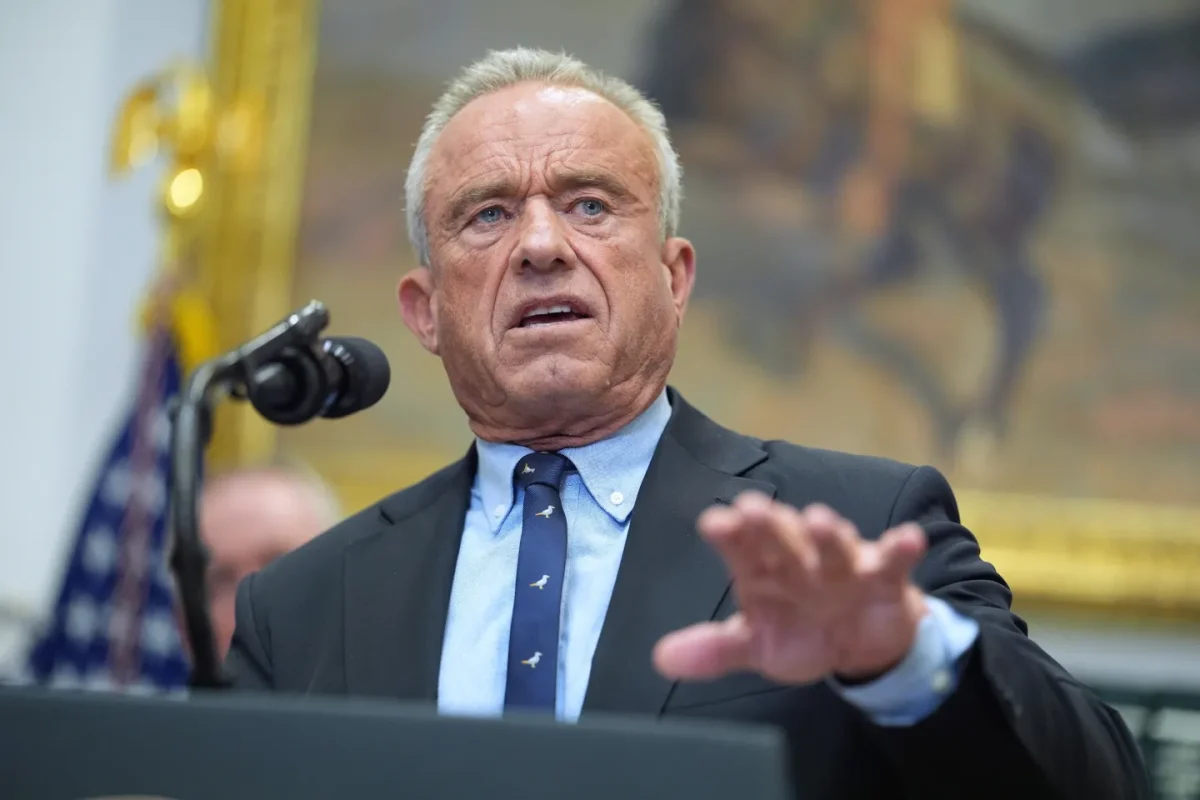
Trump administration officials said the overhaul, a move long sought by Health Secretary Robert F. Kennedy Jr., won’t result in families who want the vaccines losing access to them, and said insurance will continue to pay. But medical experts said the decision creates confusion for parents and could increase preventable diseases.
States, not the federal government, have the authority to require vaccinations for schoolchildren. While CDC requirements often influence those state regulations, some states have begun creating their own alliances to counter the Trump administration’s guidance on vaccines.
The change comes as U.S. vaccination rates have been slipping and the share of children with exemptions has reached an all-time high, according to federal data. At the same time, rates of diseases that can be protected against with vaccines, such as measles and whooping cough, are rising across the country.
Among those left on the recommended-for-everyone list are vaccines against measles, whooping cough, polio, tetanus, chickenpox and human papillomavirus, or HPV. The guidance reduces the number of recommended vaccine doses against HPV from two or three shots depending on age to one for most children.

Medical experts said Monday’s changes without what they said was public discussion or a transparent review of the data would put children at risk.
“Abandoning recommendations for vaccines that prevent influenza, hepatitis and rotavirus, and changing the recommendation for HPV without a public process to weigh the risks and benefits, will lead to more hospitalizations and preventable deaths among American children,” said Michael Osterholm of the Vaccine Integrity Project, based at the University of Minnesota.
Dr. Sean O’Leary of the American Academy of Pediatrics said countries carefully consider vaccine recommendations based on levels of disease in their populations and their health systems.
“You can’t just copy and paste public health and that’s what they seem to be doing here,” said O’Leary. “Literally children’s health and children’s lives are at stake.”
Most high-income countries recommend vaccinations against a dozen to 15 serious pathogens, according to a recent review by the Vaccine Integrity Project, a group that works to safeguard vaccine use.
France today recommends all children get vaccinated against 14 diseases, compared to the 11 that the U.S. now will recommend for every child under the new schedule.
Doctors’ groups criticize decision
The changes were made by political appointees, without any evidence that the current recommendations were harming children, O’Leary said.
The pediatricians’ group has issued its own childhood vaccine schedule that its members are following, and it continues to broadly recommend vaccines that the Trump administration demoted.
O’Leary singled out the flu vaccine, which the government and leading medical experts have long urged for nearly everyone starting at age 6 months. He said the government is “pretty tone deaf” for ending its recommendation while the country is at the beginning of a severe flu season, and after 280 children died from flu last winter, the most since 2009.
Even a disease that parents may not have heard of, rotavirus, could come roaring back if vaccination erodes, he added. That diarrheal disease once hospitalized thousands of children each winter, something that no longer happens.
The decision was made without input from an advisory committee that typically consults on the vaccine schedule, said senior officials at HHS. The officials spoke on the condition of anonymity because they weren’t authorized to discuss the changes publicly.
The officials added that the new recommendations were a collaborative effort between federal health agencies but wouldn’t specify who was consulted.
Scientists at the CDC’s National Center for Immunization and Respiratory Diseases were asked to present to the agency’s political leadership about vaccine schedules in other countries in December, but they were not allowed to give any recommendations and were not aware of any decisions about vaccine schedule changes, said Abby Tighe, executive director of the National Public Health Coalition, an advocacy organization of current and former CDC employees and their supporters.
“Changes of this magnitude require careful review, expert and public input, and clear scientific justification. That level of rigor and transparency was not part of this decision,” said Dr. Sandra Fryhofer, of the American Medical Association. “The scientific evidence remains unchanged, and the AMA supports continued access to childhood immunizations recommended by national medical specialty societies.”

Kennedy is a longtime vaccine skeptic
The move comes as Kennedy, a longtime activist against vaccines, has repeatedly used his authority in government to translate his skepticism about the shots into national guidance.
In May, Kennedy announced the CDC would no longer recommend COVID-19 vaccines for healthy children and pregnant women — a move immediately questioned by public health experts who saw no new data to justify the change.
In June, Kennedy fired an entire 17-member CDC vaccine advisory committee — later installing several of his own replacements, including multiple vaccine skeptics.
Kennedy in November also personally directed the CDC to abandon its position that vaccines do not cause autism, without supplying any new evidence to support the change.